The Best Web Scraping APIs for 2025: Complete Developer Guide & Comparison

Introduction
Web scraping isn't just for hackers or data hoarders anymore. It's become essential infrastructure for SEO tools, pricing engines, lead generation apps, and even startups building MVPs.
But building your own scraper from scratch? That's a full-time job. You'll hit CAPTCHAs, IP bans, headless browser nightmares, and websites that break every week.
That's where scraping APIs come in.
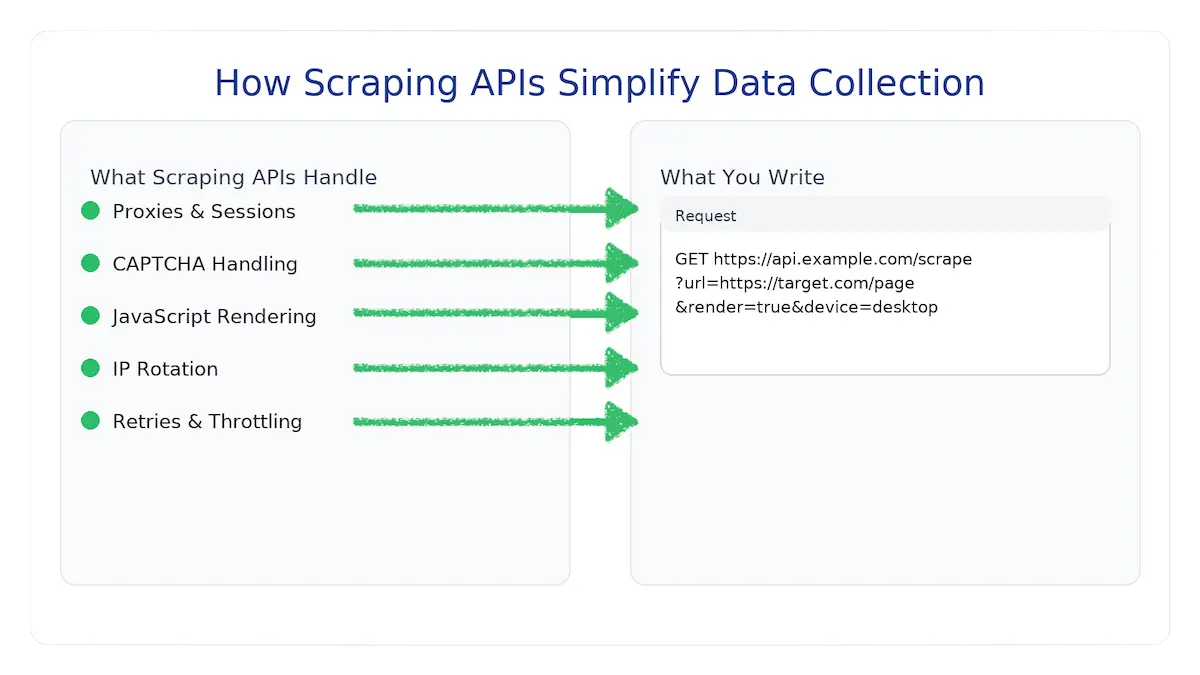
They take care of the hard stuff—like proxies, session handling, and rendering JavaScript—so you can focus on getting clean data.
We tested the top players in the space and broke it down in plain English, with use cases, benchmarks, and real recommendations. This isn't just a features list—it's what to use, when, and why.
1. Zyte – Best for Developers and Customization
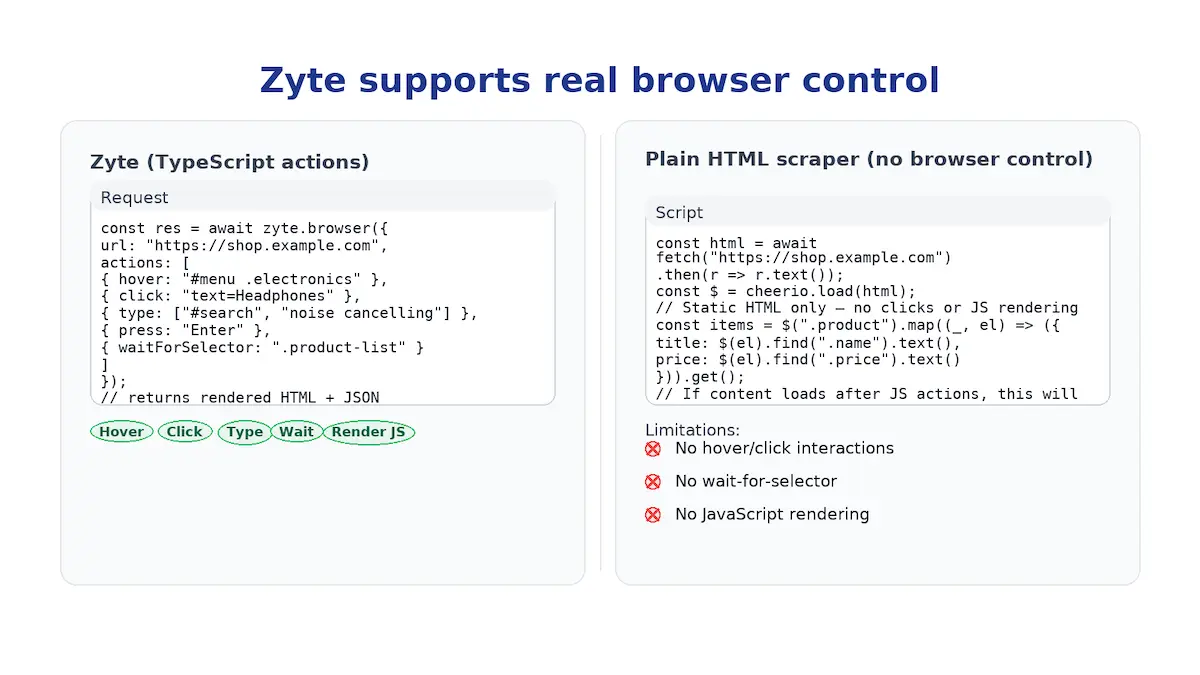
If you're technical and need control over scraping behavior, Zyte is your go-to. You can even write scripts to simulate mouse hovers, form submissions, or time delays. Their browser automation via TypeScript is unmatched.
Highlights:
- 98.38% average success rate
- Fastest performance on high-volume sites like Amazon and Google
- Pay-as-you-go pricing with feature-based adjustments
- Manual parsing using CSS selectors
When to use it:
Scraping highly dynamic pages, or when you need browser behavior to interact with elements (like expanding dropdowns or clicking "Load more").
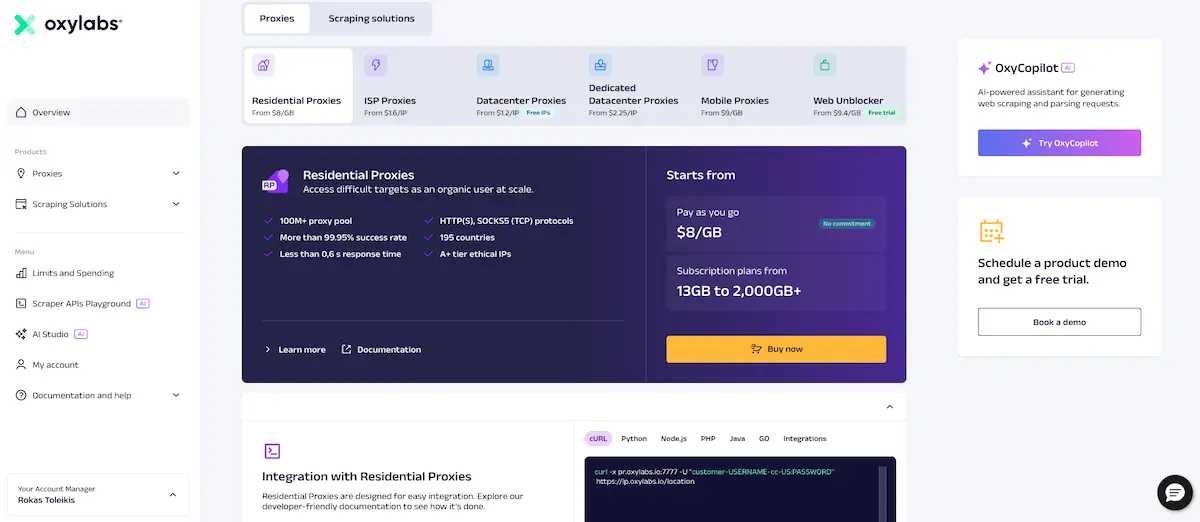
2. Oxylabs – Best for Enterprise-Grade Scale
Oxylabs is robust, customizable, and comes with a dashboard that feels like a command center. Their OxyPilot tool can generate scraping code automatically. If you're scraping multiple geolocations or working with structured datasets, it delivers.
Highlights:
- 98.5% success rate
- API supports ZIP-level targeting for Amazon, and coordinate-based targeting for Google
- Built-in support for asynchronous batch scraping
- JSON output available, with XPath and CSS selector options
When to use it:
Large-scale projects where precision, documentation, and support matter. Think of scraping thousands of city-specific SERPs or monitoring global product pricing.
3. Decodo (formerly Smartproxy) – Best Value for Speed + Features
Fast, affordable, and easy to work with, Decodo has four API types covering general web, SERPs, e-commerce, and social media. It has the best success rate in our internal tests and offers ready-to-use tools and templates.
Highlights:
- 99.83% success rate
- Fastest average response time: 5.05 seconds
- Supports JSON parsing for most major websites
- Integration kits for Python, Node.js, PHP, and Postman
When to use it:
Agencies, startups, and SaaS platforms that need reliable, scalable scraping without the high enterprise costs.
4. OpenGraph.io – Best for Metadata, Previews, and Simplicity
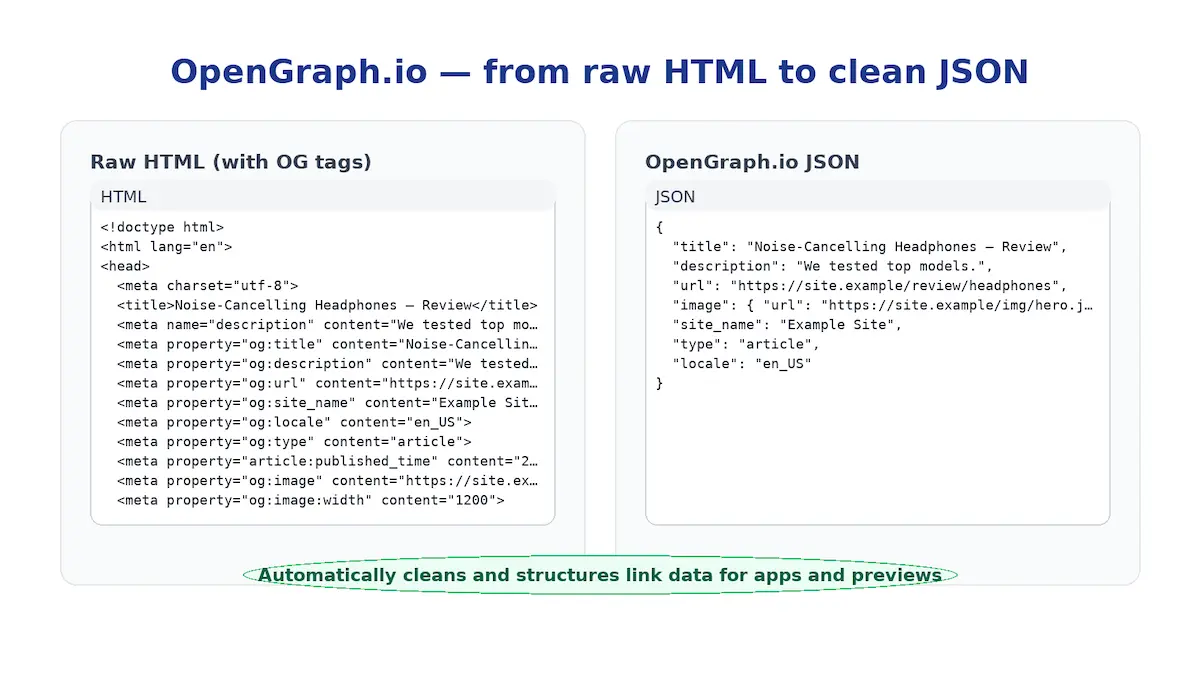
If you're building anything that needs to extract titles, descriptions, images, Open Graph tags, or Schema.org data from URLs, OpenGraph.io is purpose-built for that.
With multiple API endpoints you have access to the full-page HTML, and you get clean, ready-to-use metadata—and fast.
Highlights:
- Average response time: ~2.9s
- Structured JSON output with automatic fallback when OG tags are missing
- Great for link previewing, SEO tools, and headless apps
- No need to manage headers, proxies, or JS
When to use it:
Apps that show previews of links (like Slack or LinkedIn), or when you need to monitor metadata health at scale. You can try it right now with the free Web Scraping Tool — no account needed.
5. Nimbleway – Best for AI-Powered Scraping
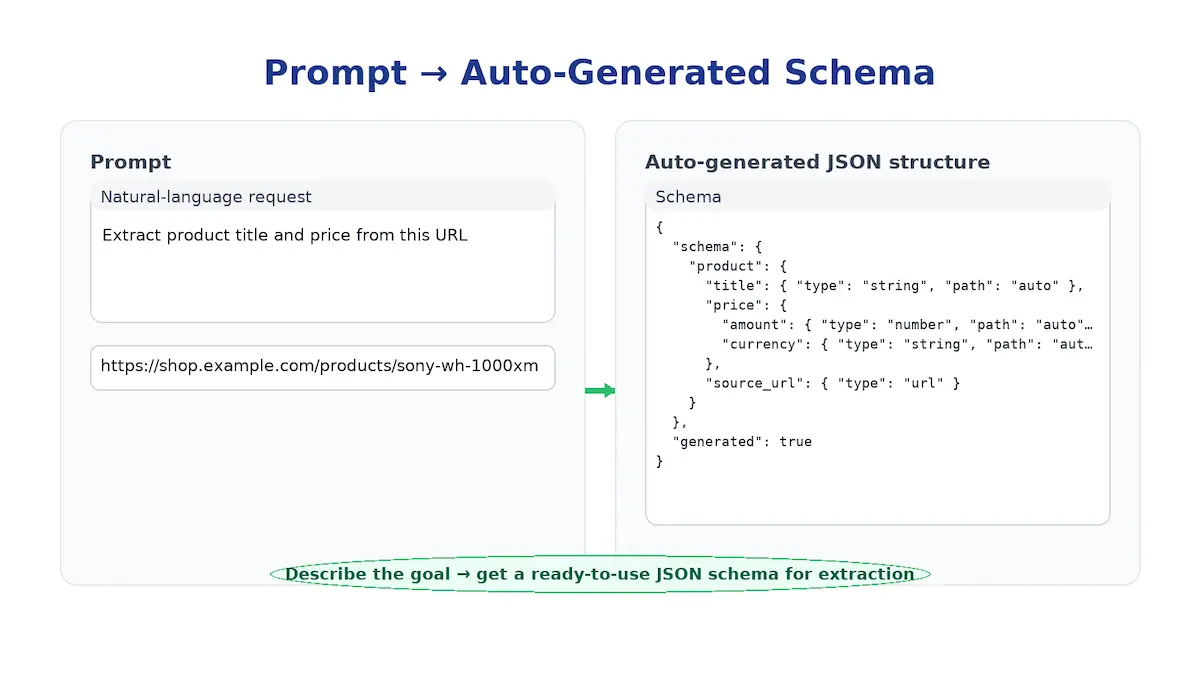
Rather than fiddling with selectors, Nimbleway lets you describe your scraping target in plain English. It builds and adjusts schemas automatically, and routes data directly to your cloud buckets.
Highlights:
- 95.48% success rate
- Natural language prompts for schema generation
- Strong results for social platforms, e-commerce, and visual content
- Pushes results to Amazon S3 or Google Cloud Storage
When to use it:
Teams with limited engineering bandwidth that want AI to manage selectors and scraping logic.
6. Bright Data – Best for Complex, Large-Scale Operations
Bright Data is heavy-duty. It's built for organizations running hundreds of thousands of requests across multiple endpoints. It's also one of the few tools with dedicated scraping for Google Maps, YouTube, and Shopping.
Highlights:
- 97.90% success rate
- Supports batch and bulk scraping with device and city-level targeting
- Fixed per-request pricing, regardless of site
- Best-in-class SERP API
When to use it:
When you're scraping every day, across many endpoints, and want granular control with guaranteed delivery.
7. ScraperAPI – Best for Simple, Budget Projects
ScraperAPI is an easy, affordable way to get started with scraping. It works well for static websites or those with limited protection, but struggles with complex or JavaScript-heavy targets.
Highlights:
- 67.72% success rate
- Clean documentation with multi-language SDKs
- Google and Amazon parsing are supported with extra parameters
- Best suited for budget use cases
When to use it:
Side projects, content scraping, or low-scale crawlers targeting open websites.
Final Recommendations
| Use Case | Recommended API |
|---|---|
| Fast scraping with full control | Zyte |
| Enterprise-grade scraping at scale | Oxylabs |
| Best speed-to-price ratio | Decodo |
| Metadata, link previews, SEO audit | OpenGraph.io |
| AI-assisted setup with cloud delivery | Nimbleway |
| SERP and bulk scraping | Bright Data |
| Budget scraping of unprotected websites | ScraperAPI |
Choosing the right web scraping API depends on your specific needs, budget, and technical expertise.
Whether you're looking for granular control, enterprise-level scalability, AI-powered automation, or simple metadata extraction, there's a solution out there to streamline your data collection efforts.
By leveraging these powerful tools, you can avoid the common pitfalls of building scrapers from scratch and focus on extracting valuable insights from the web.